
From Factory to Installation: How Custom Carpentry Is Made

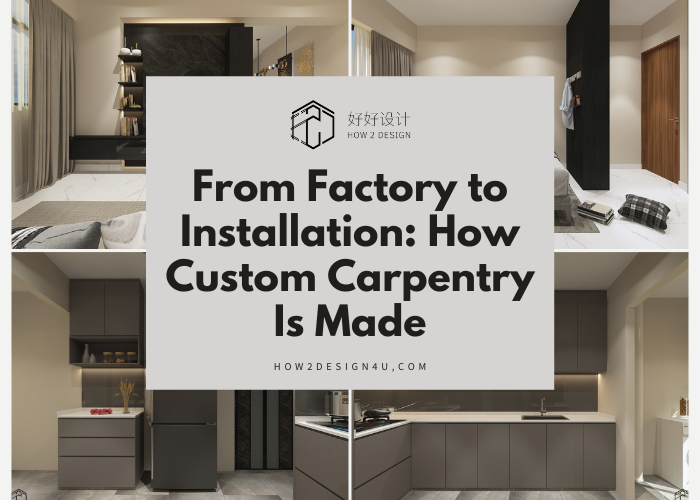
When homeowners see a completed wardrobe, kitchen cabinet, or TV console, they often only see the final product.
What many don't realise is that custom carpentry goes through a detailed process long before it arrives at your home. From measurements and material selection to production and installation, every step plays a role in determining the quality, durability, and finish of the final result.
Understanding how custom carpentry is made can help homeowners appreciate the craftsmanship behind every piece and make better renovation decisions.
Step 1: Understanding Your Space and Requirements
Every custom carpentry project begins with understanding how the space will be used.
This includes discussions about:
Storage requirements
Family lifestyle
Design preferences
Functional needs
Space limitations
A wardrobe designed for a young couple may be very different from one designed for a family with children.
The goal is not simply to build cabinets, but to create storage solutions that fit the homeowner's daily routine.
Step 2: Site Measurement and Verification
Accurate measurements are critical.
Before production starts, detailed site measurements are taken to ensure every piece fits perfectly.
Measurements consider:
Wall dimensions
Floor levels
Ceiling heights
Existing structures
Electrical and plumbing locations
Even small measurement errors can affect installation quality, which is why verification is an important part of the process.
Step 3: Design and Layout Planning
Once measurements are confirmed, the carpentry layout is finalised.
This stage determines:
Internal storage configuration
Shelf placement
Drawer arrangement
Door opening directions
Hardware requirements
The focus is on balancing aesthetics and practicality.
A well-designed cabinet should not only look good but also be easy to use every day.

Looking for other interesting deals? Click this >>https://wa.link/5w4lre
Step 4: Material Selection
The materials chosen directly impact durability, appearance, and indoor comfort.
Common decisions include:
Board Selection
E0 plywood
Plywood
MDF
Particle board
Surface Finishes
Laminates
Woodgrain textures
Matte finishes
Gloss finishes
Hardware
Hinges
Drawer runners
Soft-closing systems
Quality materials often contribute significantly to the lifespan of the carpentry.
Step 5: Production in the Factory
After designs and materials are confirmed, production begins.
Using specialised machinery, boards are:
Cut to precise dimensions
Labelled for assembly
Prepared for finishing
Quality checked throughout production
Factory production allows greater accuracy and consistency compared to making everything on-site.
This controlled environment helps minimise errors and improves overall workmanship.
Step 6: Edge Banding and Finishing
Once panels are cut, the edges are sealed and finished.
This process:
Protects exposed edges
Improves durability
Creates a cleaner appearance
Reduces moisture penetration
Proper finishing is one of the details that separates quality carpentry from average workmanship.
Step 7: Assembly Preparation
Before delivery, components are organised according to installation requirements.
Each piece is checked to ensure:
Correct sizing
Proper finishing
Hardware compatibility
Structural stability
This stage helps reduce delays and installation issues on-site.
Step 8: Delivery to Site
Once production is completed, the carpentry components are transported to the project site.
Careful handling is important to prevent:
Surface scratches
Corner damage
Laminate defects
Proper packaging and transportation protect the finished products before installation.
Step 9: Installation
Installation is where everything comes together.
The installation team will:
Position cabinets accurately
Level and align components
Secure structures safely
Install hardware and accessories
Adjust doors and drawers
Attention to detail during installation is crucial.
Even well-manufactured carpentry can look poor if installation is not done properly.
Step 10: Final Inspection and Adjustments
After installation, a final inspection is conducted.
This includes checking:
Door alignment
Drawer operation
Surface condition
Finishing quality
Hardware performance
Minor adjustments are made to ensure everything functions smoothly before handover.
Why In-House Carpentry Makes a Difference
When carpentry is produced and managed in-house, homeowners often benefit from:
Better Quality Control
The same team oversees production and installation.
Faster Turnaround Time
Communication between factory and site teams is more efficient.
Greater Customisation
Changes can be managed more effectively during production.
Improved Accountability
There is a clear point of responsibility throughout the project.
Custom carpentry is much more than cutting wood and assembling cabinets.
From initial measurements to final installation, every stage contributes to the quality of the finished product. The best carpentry solutions combine thoughtful design, quality materials, precise production, and skilled installation.
Understanding this process helps homeowners make informed decisions and appreciate the value behind well-crafted custom furniture.
Planning Your Renovation?
At How 2 Design 4U, our in-house carpentry team manages the process from design and production to installation, ensuring better quality control, smoother coordination, and customised solutions tailored to your home. Contact How 2 Design for a consultation today!


Comments